Borobudur Temple: History, Spiritual Meaning and Complete Visitor Guide (2026)
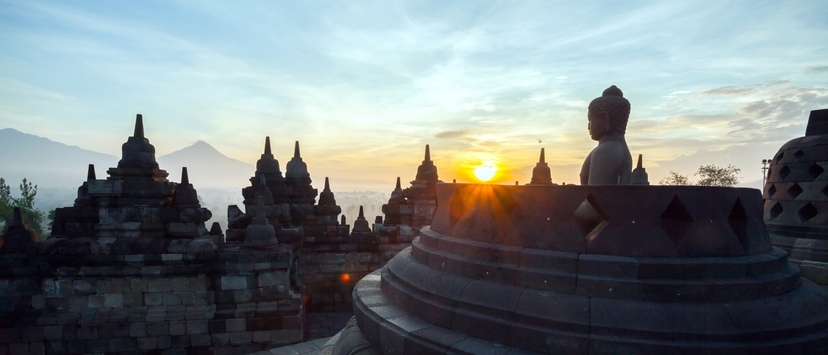
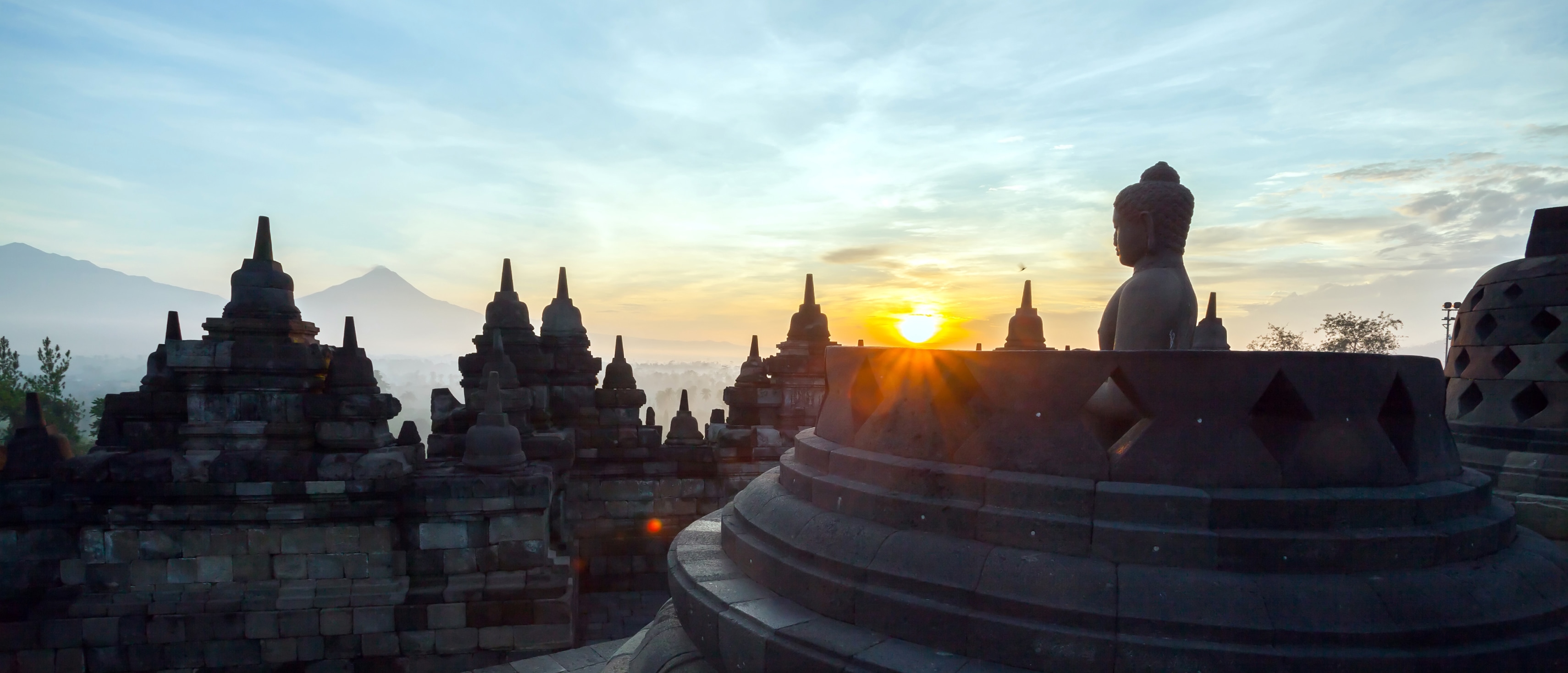
The approach is the part the photographs don't prepare you for. Walking the tree-lined path toward the entrance, there's a moment when the full pyramidal silhouette of Borobudur clears the canopy and appears above you. All nine levels of it, grey volcanic andesite against the Kedu Plain sky. On a dry morning the stone carries a faint mineral smell, and by midday it radiates heat through the soles of your sandals. What's harder to picture, standing there, is that this was buried and lost for the better part of a millennium.
The History of Borobudur: Built, Forgotten, Found
The Sailendra dynasty began construction in the late 8th century, around 780 CE. Building continued in phases into the early 9th century, with the temple reaching completion around 820 to 825 CE, during or after the reign of King Samaratungga. What they built is a nine-level stone structure encoding the entire Buddhist cosmological journey in relief panels, statues, and spatial transitions, a manual for enlightenment in andesite.
Borobudur stayed in active use through the late 10th century. The Javanese court had shifted eastward by the mid-10th century, a move historians link to some combination of volcanic instability and political upheaval, though the exact causes are still debated. As Islam became the dominant faith across Java in the centuries that followed, active use of the temple gradually faded. The same volcano you can see from the upper terraces, Merapi, is tied to both the temple's sacred siting and its eventual burial under ash and jungle growth.
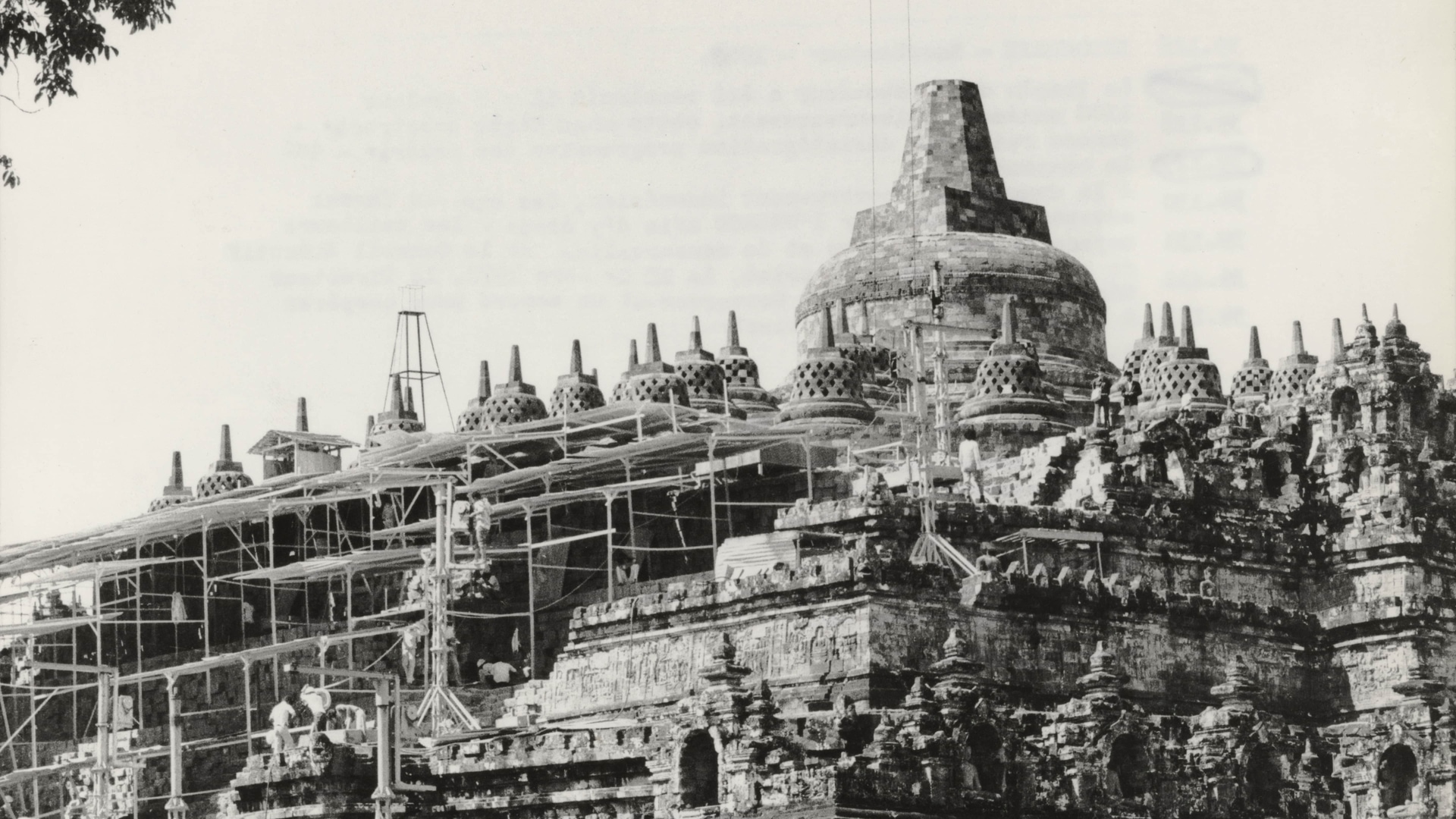
By the early 19th century the site had been lost for centuries. Excavations began in 1814, and what emerged over the following decades was brought back through one of the most significant restoration projects in Southeast Asian history. An eight-year UNESCO effort, completed in 1983, dismantled, treated, and rebuilt over a million stones.
The Architecture and Symbolic Meaning: Climbing Toward Nirvana
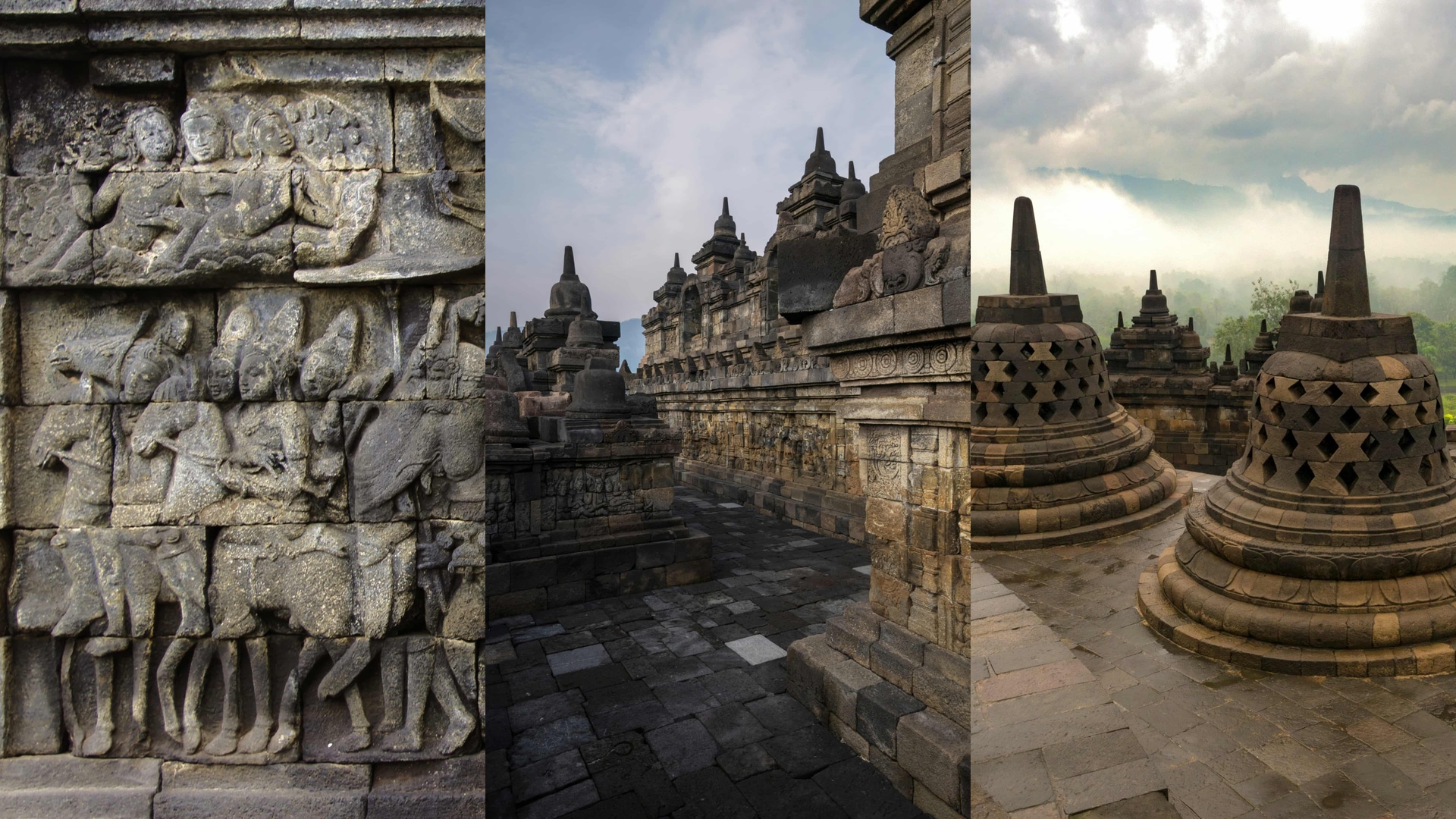
The climb offers something more specific than scale. It's a physical passage through three cosmological realms, designed so that what you see and feel at each level enacts its theological meaning.
The base: Kamadhatu, the realm of desire. The original base carries 160 carved karma panels, known as the Karmawibhangga reliefs, almost entirely hidden beneath an encasement foot added for structural stability. Only the southeast corner stays exposed. The Karmawibhangga Museum, a few minutes' walk north of the main entrance and included in the park access ticket, holds Kassian Cephas's 1890 photographs of all 160 panels.
The five square platforms: Rupadhatu, the realm of form. Walking clockwise as prescribed, you pass 1,460 narrative relief panels covering the life of the Buddha, the Jataka tales of his previous lives, and the Gandavyuha, the story of a young pilgrim's search for enlightenment. And the Buddha statues on the square terraces aren't identical. East-facing statues show the earth-touching gesture of enlightenment, south charity, west meditation, north fearlessness. A visitor who knows this reads the gallery walk as a directional mandala.
The three circular terraces: Arupadhatu, the realm of formlessness. At the transition from the fourth square gallery to the first circular terrace, the walls end and you step into open sky. Abrupt. Unannounced. It's the architectural enactment of the passage from form to formlessness, and repeat visitors name this as the moment the temple stops being about scale and starts being about presence.
The main stupa at the summit is solid. Nothing to enter. Arriving and finding an empty centre is theologically precise. It's sunyata, emptiness, the state of nirvana beyond form.
Best Time to Visit Borobudur
Dry season (May through September) is the safer window for the whole visit. Skies stay clearer for the climb, Merapi is reliably visible from the upper terraces, and afternoon downpours aren't cutting things short. July and August are peak for both weather and crowds, so structure slots and sunrise access need booking well ahead. Wet season (October through April) brings frequent cloud cover and less predictable conditions, though a thinner crowd and a green Kedu Plain are real tradeoffs in its favor.
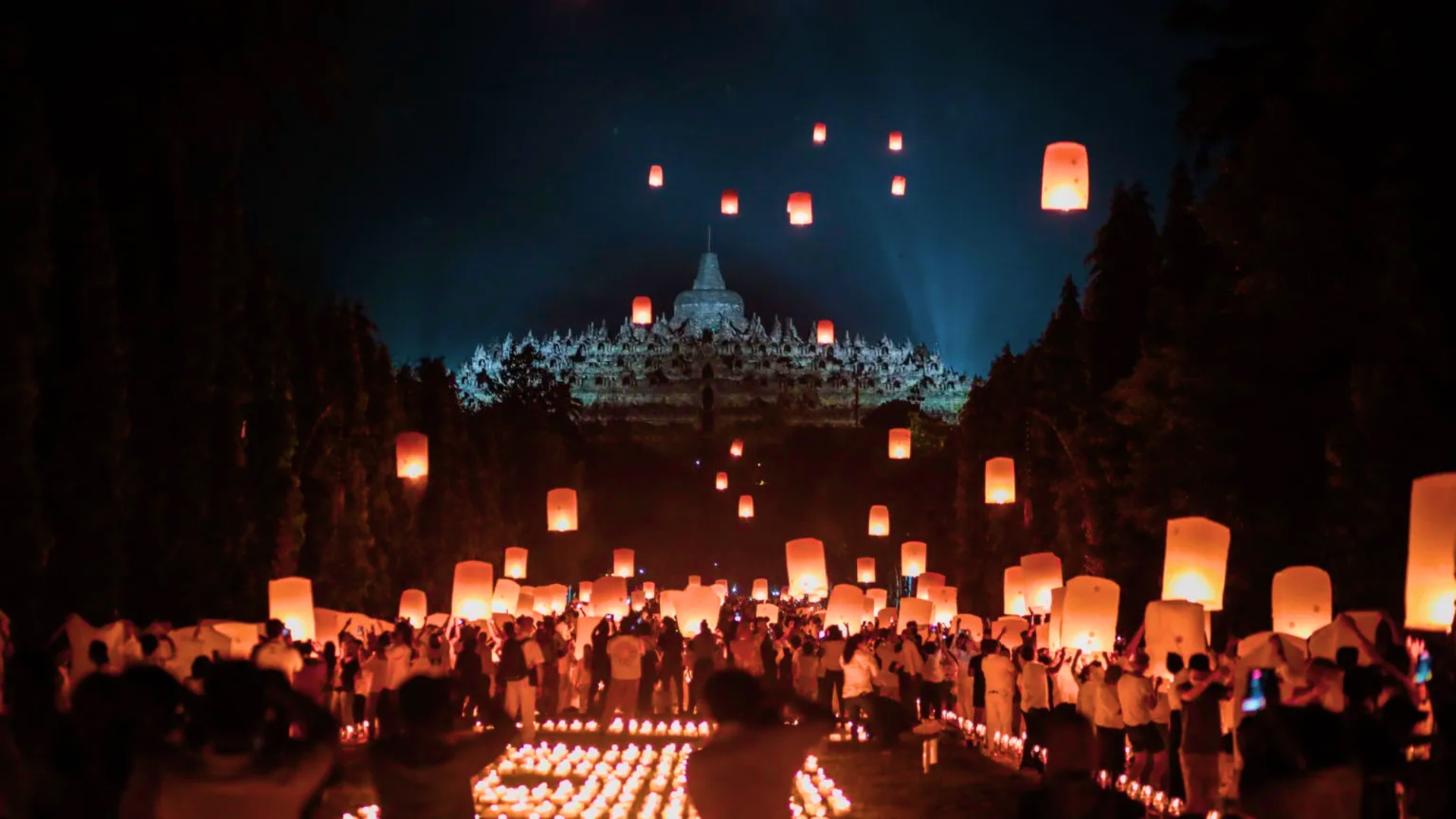
One date worth planning around is Vesak Day, the most sacred day in the Buddhist calendar. Borobudur marks it with a candlelit procession on the full moon of May, drawing tens of thousands of pilgrims. It's a completely different experience from a standard visit and requires its own planning.
How to Get to Borobudur from Yogyakarta
The DAMRI public minibus costs around IDR 20,000 per person, with multiple daily departures. The departure point trips people up. It leaves from Titik Nol Kilometer, the Zero Kilometer landmark on Malioboro, not from any bus terminal. The last return bus to Yogyakarta leaves around 15:00, so it doesn't work if you're planning to stay into the afternoon.
Flying in from Bali or Jakarta? There's also a direct DAMRI service from Yogyakarta International Airport (YIA) straight to Borobudur. No need to go into the city first.
By private car or online taxi services, the drive from Yogyakarta city centre runs 75 to 90 minutes; from YIA, closer to 60 to 75. For the 04:00 sunrise arrival, no public transport runs that early. You'll need a private vehicle arranged the night before, which means leaving the city around 02:30 to 03:00.
Tickets, Hours, and Entry Rules
Here's the one decision that catches people out. There are two separate products. A Temple Ground ticket covers park access only, no climbing, for IDR 412,500 (around €25). A Temple Structure ticket adds climbing access for IDR 455,000 (around €28 per slot). They can't be combined or upgraded at the gate on the same day.
Slots are booked in advance at ticket.borobudurpark.com. During peak season (July and August, Christmas, and Indonesian national school holidays), they sell out three to seven days ahead. The structure runs on a slot system that now operates seven days a week, since the Monday restriction lifted in July 2025. It allows 150 visitors per hour across eight slots from 08:30 to 15:30, for a maximum of 1,200 visitors a day.
Entry includes a certified guide assigned at the gate, working with groups of 10 to 15 over 90-minute visits. The guide isn't optional, but a good one earns it. They'll explain the mudra system, point out the exposed southeast corner of the Kamadhatu foot, and share the story of Mbah Belet, the unfinished Buddha in the main stupa niche whose tale connects to active local devotional practice.
Sunrise and Sunset at Borobudur: How to Book in 2026
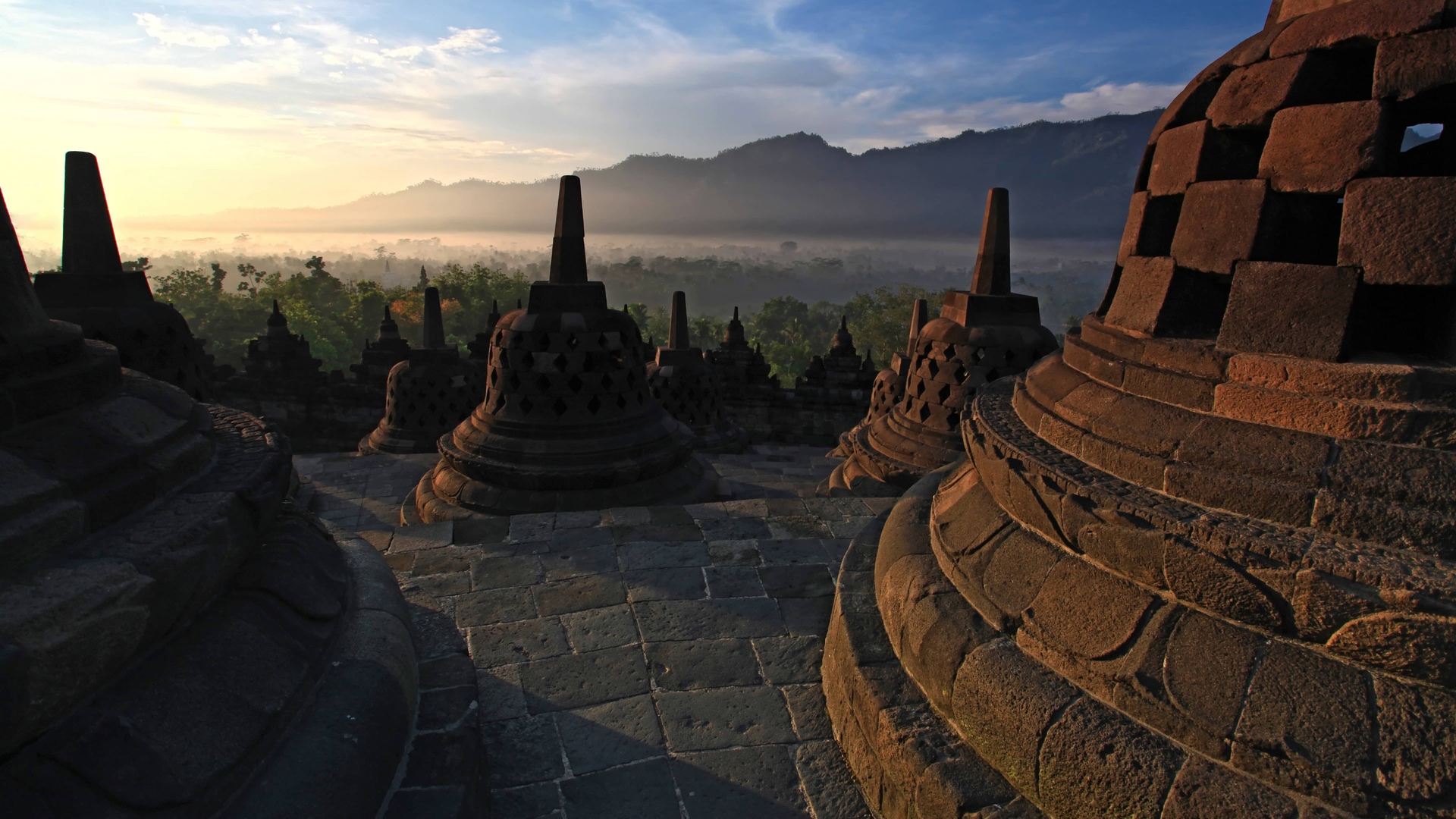
Suspended during the pandemic, the sunrise programme at Borobudur was reinstated on 17 July 2025. Entry is at 04:00 WIB from the Borobudur Cultural Center, capped at 100 visitors per day. The price is IDR 1,000,000 (around €51) per person, including a flashlight, Upanat sandals, a certified guide, and breakfast. Access is limited and fills quickly during peak season; it's the kind of addition worth building your Java dates around.
What you're actually doing is ascending an unlit temple in darkness with a flashlight, volcanic stone still warm from the day before, the silhouette of Merapi slowly coming into focus against the first lightening sky. People who've done both the daytime and pre-dawn visits don't describe them as two versions of the same thing. They describe them as two different experiences entirely.
The site has since added an evening sunset visit, launched in November 2025 and the first it has ever offered. Entry at 16:30 WIB, closing at 18:30, 100 visitors maximum, IDR 1,000,000 including dinner, bookable through the same channels as sunrise. Both programmes are weather-dependent, and the odds are best in dry season, the same as for the rest of the visit.
How to Visit Borobudur Respectfully
Most of the rules here have a reason most visitors never hear. These are the five that matter.
Wear the Upanat sandals. Not a generic slipper, but a woven pandan sole designed to minimise friction against andesite stone. It's included in the structure ticket, issued at the gate, and yours to keep after the visit.
Don't touch the reliefs or statues. There are 2,672 carved panels across the temple. Continuous skin contact causes irreversible erosion of the andesite surface. The panels have survived over a thousand years; the main threat now is hands.
Don't sit on or climb the stupas. The rule is devotional, not aesthetic. The perforated stupas on the circular terraces contain seated Buddha statues in dhyana mudra. Sitting on a stupa means sitting on a Buddha image.
Walk clockwise from the east gate of each level. This isn't crowd management. It's pradaksina, the Buddhist ritual of circumambulation. The relief panels on the gallery walls only read in narrative sequence walking this direction. Go the other way and every story runs backwards.
Shoulders and knees covered. Borobudur is an active place of worship, not a museum. There's a dress code enforced at the gate, and you won't get through in a tank top or shorts. If you happen not to be dressed appropriately, sarongs are available at the entrance.
Practical Tips for Planning Your Visit
Book the 08:30 slot. The stone hasn't absorbed the midday heat yet, you're out before the crowds build, and early light falls directly on the east-facing relief panels, which matters if you're shooting.
Borobudur and Prambanan in one day is doable, but the temples are around 60 km apart in opposite directions from Yogyakarta. That's over two hours of driving for the round trip. The sequence that works is Borobudur first thing in the morning, Prambanan in the late afternoon. Prambanan at dusk is a different experience from a midday visit; it's worth the extra hour.
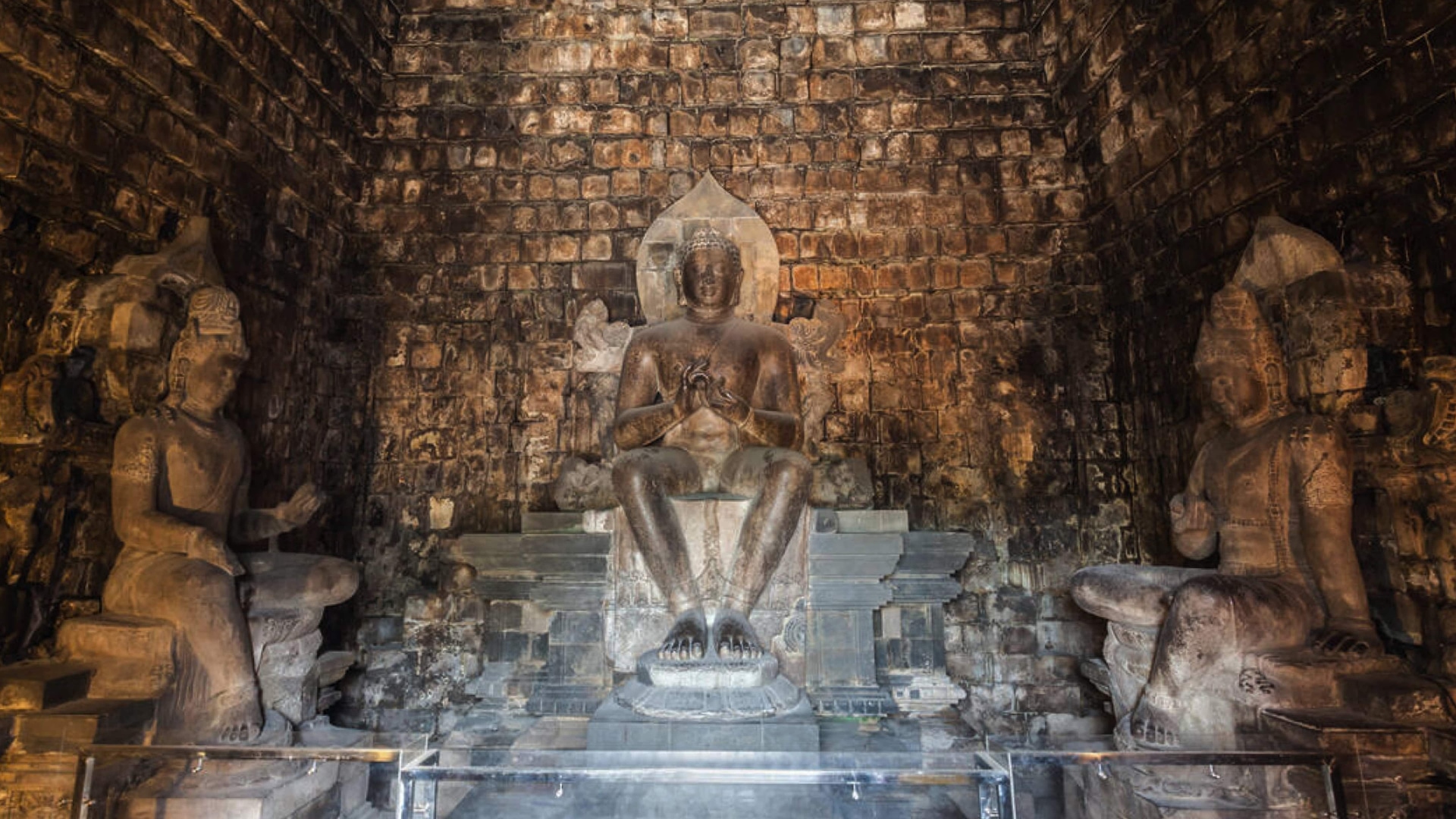
One stop most people skip is Mendut Temple, roughly 3 km from Borobudur on the same road back to Yogyakarta. Thirty to 45 minutes inside. A three-metre stone Buddha flanked by Avalokiteshvara and Vajrapani, among the finest surviving Buddhist sculpture on Java. Most people drive past without stopping.
Borobudur is rarely the whole trip. It's usually one stop in a longer Java itinerary alongside Prambanan, Yogyakarta, and beyond. Getting the temple right, the ticket, the slot, the hour, sets the tone for everything that follows. If you're putting that itinerary together, speak with a True Indonesia specialist and let us help plan the whole route, not just this one stop.